



Understanding Self-Medication: How to Fight Pain Responsibly
It is a simple fact of life that people must manage their own health and wellness. Exercise, diet, and assessment of injury and illness are often best handled on an individual basis. You don’t need tests to know you have a head cold, best treated with bedrest and electrolytes. Treating a cut finger with disinfectant and an adhesive bandage makes far more sense than treating it at a hospital. Of course, part of the skillset of self-care is knowing when your condition requires professional intervention. But all of us will treat our own injuries and illnesses at some point. Some of us, however, will find ourselves with conditions which must be managed long term, partially by medical professionals, but mostly in the privacy and quiet of our own homes, and through the grind of our daily routines. Whatever your situation, some degree of self-medication is inevitable.
But how do we do it responsibly? As part of our ongoing “spring into relief” series, Malloy Law will seek to conduct an open and frank dialogue on this topic.
What is Self-Medication?
The day-to-day routine inevitably results in stress. This has always been the case. Stressed people seek relief from that stress. We may exercise or socialize, watch a movie or TV show. Recreation may be the most universal form of “self-medication.” But generally speaking, this isn’t what people mean when they use the term.
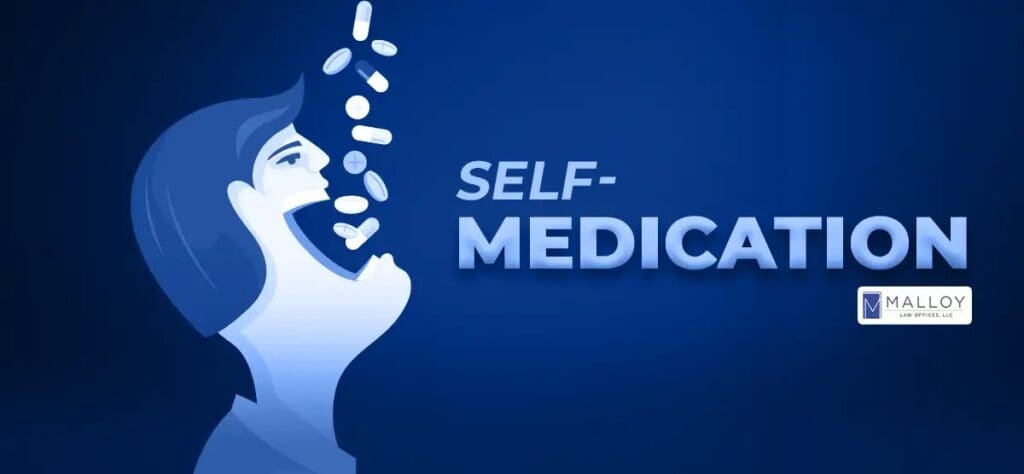
Generally speaking, people talk about “self-medication” in reference to alcohol and other drugs. Furthermore, this practice is generally understood to extend beyond the treatment of mere stress and into the realm of chronic conditions, most often pain or depression. Things like over the counter painkillers, leftover prescriptions, and cannabis are generally most often associated with this habit.
The negative connotations associated with the practice can result in a nonproductive feedback loop of shame and avoidance. People self-medicate out of a need for expedient relief or a lack of options. They fear rebuke or consequences if they’re honest about their practice, so they continue to suffer in silence or find relief however they can, all the while the actual cause of the behavior goes untreated. The question we face is whether we can or should de-stigmatize this behavior, and whether we can manage our own care responsibly.

Everything in Moderation
Many pain or mental health management regimes prescribed by accredited and responsible doctors are basically just guided self-medication. Take one pill when pain occurs, take one pill in case of anxiety. This is only reasonable. A doctor cannot assess every flare up of pain or anxiety to determine if it reaches the acceptable threshold for chemical intervention. The patient must do it themselves. This is not to absolve any party of responsibility for situations where self-medication decays into substance abuse or addiction. Take, for instance, America’s opioid epidemic. This can be thought of as an institutional failure. Doctors did not understand the addictive properties of the pills they prescribed for chronic pain, which meant patients did not realize they were developing addictions until it was far too late.

Everyone has difficult periods in their lives, and there is no shame in dealing with them through responsible application of substances. The key is remaining honest with yourself and understanding when your choices are beginning to form worrying patterns. If you are:
- Engaging in daily, or even more frequent use of substances
- Hiding your usage from others
- Using substances not to deal with any specific stressor but simply to feel “normal.”
- Finding substance use disrupting your sleep schedule, professional life, or social life
- Spending amounts of money you consider excessive to secure your substances of choice
Then it is likely time to take a break from self-medicating, and, should this prove problematic, to seek professional help and counseling.

Send the Pain “Up In Smoke?”
The widespread decriminalization, legalization, and acceptance of cannabis has been a seismic shift in American life. Maryland and Washington DC have both legalized it, and various dispensaries have it available for purchase all over the region. Many longtime advocates for cannabis have extolled its virtues as a natural painkiller, stress reducer, and treatment for all kinds of chronic conditions. The relative ease of access, and recreational quality of cannabis have made it a popular informal treatment for a wide variety of conditions, including muscle and joint pain and emotional stress.
There are several things worth considering in how we may relate to cannabis responsibly. The first is fairly practical, if your job is subject to regular drug testing, this is likely not the pain or stress reliever best suited for your lifestyle. Cannabis can remain in your system for an extended period of time (weeks as opposed to days). Secondly, while cannabis is not chemically habit-forming, it can still end up as a crutch for deeper stresses and traumas in the way any other substance can. Monitoring your intake and indulging responsibly makes for better health in the long term. Finally, the same advice we dispense about alcohol is still relevant here. Do not smoke or vape and drive, it endangers you, your passengers, and anyone else on the road.

How Malloy Law Can Help
One of the most rewarding parts of our work at Malloy Law Offices is helping injured people access the care they need to minimize or eliminate pain. If you or a loved one has been injured in an accident due to another party’s negligence, contact Malloy Law today. Let’s win your case.